
Is Your Finished Basement Hiding a Radon Problem?
- Jul 3
- 3 min read
Many homeowners invest thousands of dollars transforming their basements into comfortable living spaces. Home offices, family rooms, playrooms, guest suites, and home gyms have become increasingly popular additions to homes across Montreal and surrounding communities.
But while a finished basement may look beautiful on the surface, it could be hiding an invisible problem that many homeowners never consider: radon gas.

What Is Radon?
Radon is a naturally occurring radioactive gas produced by the breakdown of uranium in soil and rock. It is colourless, odourless, and tasteless, making it impossible to detect without proper testing.
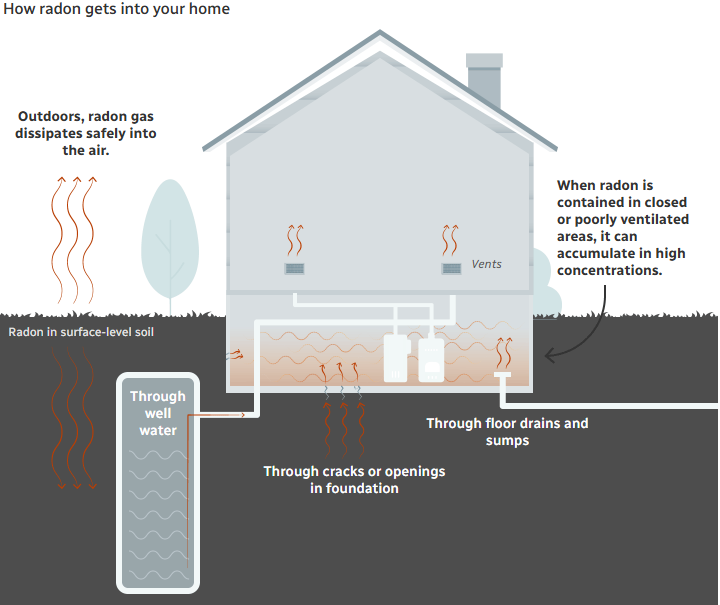
Radon enters homes through foundation cracks, gaps around pipes, floor drains, sump pits, and other openings where the home meets the ground. Once inside, it can accumulate to elevated levels, particularly in lower areas of the home.
Health Canada identifies radon as the second leading cause of lung cancer in Canada and the leading cause among non-smokers. The only way to know your home's radon level is to test it.
Why Finished Basements Are Often Overlooked
Many homeowners assume that finishing a basement somehow protects them from radon. In reality, the opposite can occur.
When a basement is unfinished, homeowners may spend very little time there.
Once the space is renovated into a living area, occupancy increases dramatically.
Consider how many hours your family spends in a finished basement:
Watching television
Working from a home office
Exercising
Playing games
Hosting guests
Sleeping in basement bedrooms
The more time people spend in an area with elevated radon levels, the greater their long-term exposure.
Hidden Behind Drywall and Flooring
One of the challenges with finished basements is that potential radon entry points become concealed.
During renovations, homeowners often install:
Drywall
Insulation
Vinyl flooring
Laminate flooring
Carpeting
Built-in furniture
While these upgrades improve appearance and comfort, they do not stop radon from entering the home.
In fact, cracks and gaps beneath finished surfaces can continue allowing radon gas to enter unnoticed.
New Renovations Can Change Airflow
Basement renovations frequently alter how air moves throughout a home.
Air sealing, insulation improvements, new windows, and upgraded HVAC systems can sometimes create pressure differences that affect radon movement from the soil into the building.
Every home is different, which is why testing remains essential regardless of a home's age, construction type, or renovation history.
Common Signs? Unfortunately, None.
Unlike mold or water damage, radon does not create visible warning signs.
You won't see it. You won't smell it. You won't taste it.
A basement can appear completely clean, dry, and professionally finished while still containing elevated radon levels.
That's why radon is often referred to as "the invisible health risk."
Should You Test Your Finished Basement?
Health Canada recommends long-term radon testing in the lowest occupied level of the home where people spend four or more hours per day.
For many Montreal homeowners, that location is the finished basement.
Testing is especially important if:
You recently finished your basement
You use the basement as a family room or office
Children frequently play downstairs
You have a basement bedroom
You have never tested your home before
You purchased an older home and do not know its radon history
What Happens If Levels Are High?
The good news is that elevated radon levels can usually be reduced effectively.
Professional mitigation systems can significantly lower radon concentrations by safely venting the gas outdoors before it enters the living space.
After installation, follow-up testing confirms the system is working properly and helps ensure your family's exposure has been reduced.
Protect the Space You Use Most
A finished basement is often one of the most valuable and heavily used areas in a home. Whether it's a playroom, gym, entertainment area, or home office, it's important to know that the air your family is breathing is safe.
Because radon cannot be seen or smelled, testing is the only way to know if a problem exists.
If you've invested in creating a comfortable basement space, make sure you're also protecting the people who use it every day.
Schedule a Radon assessment
At Radon Montreal, we help homeowners throughout Montreal, Laval, the West Island, Vaudreuil-Soulanges, and surrounding communities identify and reduce radon risks. Our professional testing services provide accurate results and peace of mind for your family.
Contact us today to learn more about radon testing and mitigation solutions for your home.


Comments