
New Canadian Study Uses Toenails to Detect Radon Exposure: What It Means for Your Home
A recent Global News report on radon and lung cancer research highlights a groundbreaking Canadian study that could change how we detect long-term exposure to radon gas—and ultimately, how we prevent lung cancer.
At Radon Montreal, we’ve been educating homeowners about radon risks for years.
This new research reinforces one key message:
Radon exposure is real, measurable, and preventable—but only if you test for it.
What the Study Found
Researchers at the University of Calgary are asking Canadians to submit toenail clippings as part of a national study on radon exposure and lung cancer risk.
Why toenails?
Because they may act as a biological archive of long-term exposure to radioactive elements, including radon.
When radon gas is inhaled, it breaks down into radioactive particles (like lead isotopes) that accumulate in slow-growing tissues such as hair and nails.
This means researchers can potentially measure a person’s lifetime exposure to radon—not just current levels in a home.

Why This Matters: Radon and Lung Cancer
Radon is:
Invisible
Odourless
Naturally occurring
Yet it is the second leading cause of lung cancer after smoking.
Even more concerning:
2 in 5 people diagnosed with lung cancer in Canada don’t meet current screening criteria
Many of them are non-smokers or former light smokers
This highlights a major gap:
We’ve historically had no reliable way to measure long-term radon exposure in individuals.
This new toenail-based method could change that.
A Wake-Up Call for Homeowners
While this research is exciting, it also confirms something we already know:
The only way to know your radon risk today is to test your home.
Toenail analysis may help future screening—but it doesn’t replace testing the air you breathe every day.
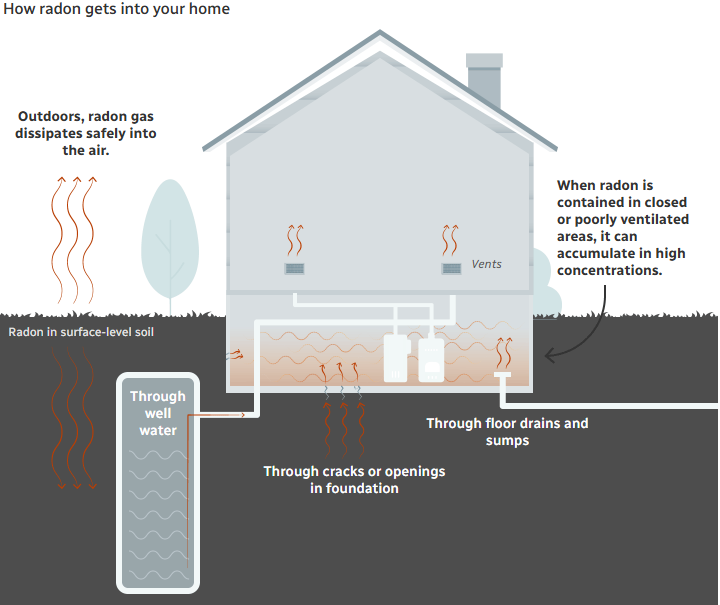
Radon builds up indoors, especially in:
Basements
Crawl spaces
Poorly ventilated homes
Winter-sealed homes (very common in Quebec)
What This Means for Montreal Homes
In Quebec, radon is a serious and often overlooked issue due to:
Cold climates → more sealed homes
High prevalence of basements
Natural geological conditions
Many homeowners assume radon isn’t a problem locally—but radon testing often proves otherwise.
How to Protect Your Family
Here’s what we recommend:
1. Test Your Home
Purchase a digital device recommended by C-NRPP and set it up in the lowest livable space, usually your basement. If your readings are low refer to a long-term radon test (90+ days) gives the most accurate and representative reading.
2. Understand Your Results
Health Canada’s guideline action level is 200 Bq/m³ (at this level you are smoking a pack a day) in reality there is no safe level of radon in your home, the lower the levels the better it is for your health.
3. Mitigate if Needed
If levels are high, a professional mitigation system can reduce radon by up to 90% or more.
The Future of Radon Detection
This Canadian study is a major step forward.
If successful, it could:
Help identify high-risk individuals earlier
Expand lung cancer screening criteria
Improve outcomes for non-smokers
But until then, one thing hasn’t changed - Your home is still the primary source of radon exposure.
Need Radon Testing in Montreal?
If you live in Montreal, Hudson, Saint-Lazare, or surrounding areas, we can help you:
Test your home accurately
Interpret your results
Install a certified radon mitigation system
Contact Radon Montreal today to get started.

Comments