
Radon Gas and Lung Cancer: Why Canadian Screening May Be Changing
Updated: Apr 16
The Invisible Risk Inside Canadian Homes
A recent CBC News report highlights a growing concern across Canada: radon gas exposure may be contributing to more lung cancer cases than previously understood.
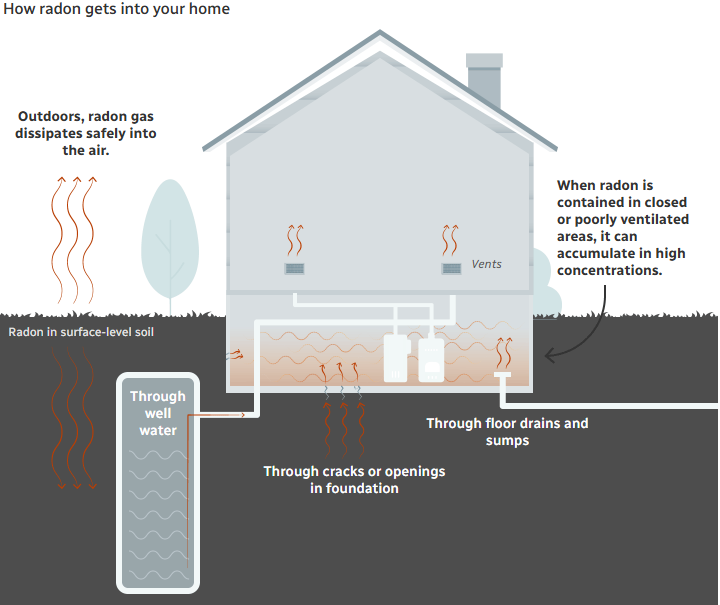
Radon is a colorless, odorless radioactive gas that forms naturally in soil and can seep into homes through foundations, cracks, and sump pits. When trapped indoors—especially in basements—it can accumulate to dangerous levels without any warning signs.
According to Canadian research, radon is now the second leading cause of lung cancer, responsible for approximately 3,200 deaths each year in Canada.
A New Approach: Radon and Cancer Screening
The CBC article points to an important shift in how healthcare professionals may approach lung cancer detection.
Researchers are exploring whether long-term radon exposure should be included in cancer screening criteria—similar to how smoking history is used today.
One groundbreaking study is even analyzing toenail samples to measure long-term exposure to radon. This innovative method could help identify individuals at higher risk who may otherwise go unnoticed.
Why does this matter?
Many people diagnosed with lung cancer have never smoked
Radon exposure is often completely unknown
Current screening programs may miss at-risk individuals
Real-Life Impact: A Silent, Long-Term Exposure
The CBC story shares real examples of Canadians who unknowingly lived with elevated radon levels for decades.
In one case, a homeowner spent years working in his basement—completely unaware that prolonged exposure could be damaging his lungs over time.
This highlights a key issue:
Radon exposure isn’t about short-term risk—it’s about long-term accumulation.
Why Radon Is a Bigger Problem Than You Think
It exists in homes across all regions of Canada
Levels can vary house by house—even next door
Newer homes can sometimes have higher levels due to better insulation
You cannot detect it without testing
In fact, millions of Canadians may be living with elevated radon levels without knowing it.
What This Means for Homeowners in Montreal
For homeowners in Montreal, Vaudreuil and surrounding areas, this research reinforces one simple message:
Testing is no longer optional—it’s essential.
Health Canada recommends taking action if radon levels exceed 200 Bq/m³, USA recommend 150 Bq/m3, Europe (World Health Organization) recommends 100 Bq/m3, but the only way to know your level is through proper testing.
There is no safe level of radon in your home.
What You Can Do Today
1. Test Your Home
We recommend getting your own digital device and measure continuously (here is a link to C-NRPP costumer approved devices).
A long-term radon test (3+ months) provides the most accurate representative reading of your exposure. Radon levels fluctuate continuously.
2. Understand Your Risk
If you:
Spend time in your basement
Work from home downstairs
Have never tested before
→ You may be at higher risk
3. Mitigate if Needed
Radon mitigation systems can reduce levels by over 90%, making your home safe again.
The Bottom Line
The latest research—and national media coverage—are clear:
Radon is no longer just a “hidden risk”—it’s a major public health issue that may soon influence how cancer is detected in Canada.
For homeowners, the takeaway is simple:
You can’t see radon. You can’t smell it. But you can test for it—and fix it.
Protect Your Home with Radon Montreal
At Radon Montreal, we specialize in:
Professional radon testing
Certified mitigation systems
Fast, reliable installation
If you’ve never tested your home, now is the time.
Buy your own digital device and get peace of mind.

Comments